Screen Time & Parenting
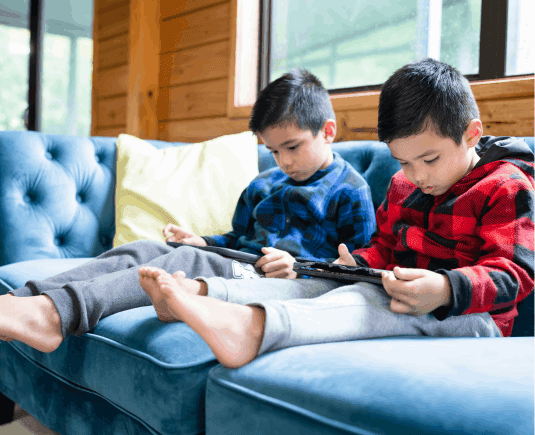
In today’s world, screens are everywhere — from cartoons on TV, to YouTube videos, to online classes, to mobile games. For parents, screen time for kids has become one of the most debated and often stressful topics.
Should we restrict it? How much is too much? Is screen time harmful, or can it be useful? And most importantly — how can parents manage it without turning daily life into a constant battle?
This article will help you look deeper into screen time, clear some common myths, and give you practical insights for a healthier relationship with screens at home.
A screen is a screen. It has its own place and value in life. The problem arises only when we use it as a substitute for something else.
Every element in our life has its own contribution — food, play, rest, conversation, or screens. But when we replace one with another, both lose their true value.
For example, many parents say: “I need some me-time, so I give the screen to my child.”
Now, if the screen is given instead of your company, that’s where the struggle begins.
A child can clearly understand when you’re in the shower, at the office, or resting — “this is my parent’s time.”
Over time, children adapt and find ways to engage themselves, provided meaningful options are available.
But if the child learns: “When I don’t get my parent’s company, I get a screen,” their sense of both connection and screen use becomes blurred.
👉 The real issue is not the screen itself. It’s the replacement of your presence with a screen.

Every parent needs space to breathe. That’s natural, and children can understand it too.
The challenge is how we frame it. If me-time is shown clearly — “This is my time, and you’ll play or read or create during this time” — children learn to respect it, just like they respect your office time or shower time. But when screens become the default substitute for your company,
they stop being a tool and start being a crutch.
That’s when they become a struggle.
✨ The shift is simple: Instead of saying “Here’s a screen because I’m busy,” we can invite children to explore alternatives. Screens then remain what they are meant to be — a part of life, not a replacement for love and presence.

Many parents believe that banning or restricting certain shows will protect children. But research and real-life experience show that:
* A child above 4 years will eventually know they are being restricted.
* Once they realize that, they often become more determined to access the “forbidden” content.
* This can damage trust and create unnecessary power struggles.
👉 The key insight: Long-term restrictions don’t work. What works is guidance, presence, and healthy habits.
The Role of Parental Presence
Kalyan, a parenting guide, shares an important perspective:
“Screens are just one of the many things in a child’s life. The problem begins when we use screens as a replacement for our company.”
Children don’t just need our supervision — they need our presence without agendas. Time where we aren’t correcting, teaching, or distracting, but simply being with them.
When children feel truly seen and understood, their relationship with screens becomes healthier. They no longer see it as a forbidden fruit but as just another part of life.
How much screen time is okay for kids?
* Some days, it may be 30 minutes.
* Some days, it could be 2–3 hours.
*Some days, none at all.
The balance comes when children also have:
* Physical play (running, cycling, outdoor games)
* Creative indoor play (puzzles, blocks, drawing)
* Social time (with peers and family)
* Rest and downtime
If screens don’t replace these, occasional longer sessions are not harmful.
Is screen time harmful for toddlers?
If screens are used, they should be:
* Short (a few minutes at a time)
* Supervised
* Age-appropriate (songs, rhymes, stories)
But the real learning still comes from being with parents and caregivers.
Should kids eat while watching screens?
When children eat while watching, they lose their natural hunger cues. Eating becomes dependent on distraction rather than awareness of hunger and taste. This can lead to unhealthy food relationships later in life.
👉 Food and screens should not mix. Mealtimes are for food, family, and conversation.
How do I manage screen time when I need “me time”?
* Children can learn that parents also have personal time, just like bath time or work time.
* With consistent, non-verbal communication (calmly, without guilt or anger), children slowly understand this.
* Instead of giving the screen in lieu of your company, create other options: a toy corner, art supplies, puzzles, or even downtime where the child plays alone.
What’s more harmful — too much screen or constant restriction?
Instead, when parents treat screens as “just another thing” (not THE thing), children also learn to see it neutrally.
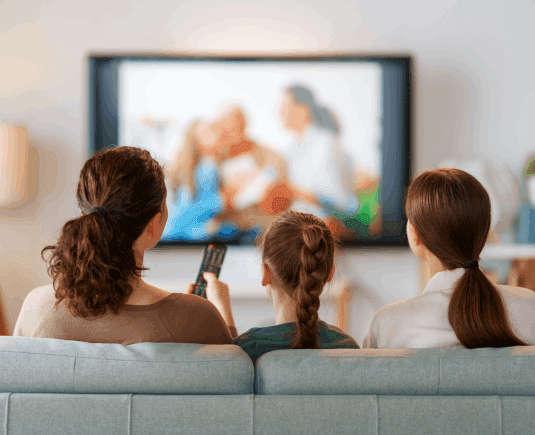
* Co-watch when possible: Watch with your child and talk about what they are seeing.
* Create playful rules: For example, “Sundays are no-screen days for everyone in the family.”
* Model balance: Children copy parents. If you’re glued to your phone, they will be too.
* Focus on presence: More important than screen limits is the quality of your presence when you are with them.
Screen time doesn’t have to be a constant fight. The real shift comes when we stop asking “How do I restrict my child?” and start asking “How do I connect with my child?” Because in the long run, it isn’t the hours of screen time that shape a child’s world — it’s the trust, presence, and understanding they experience with us as parents.